
Fall Harvest First Foods: Pumpkin, Squash, and Apple
Key Takeaways
- Pumpkin, squash, sweet potato, and cooked apple all roast down to textures a baby can manage, and all four freeze well.
- Buy plain canned pumpkin, not pumpkin pie mix. The mix has added sugar, which the Dietary Guidelines say to avoid in early childhood.
- Raw apple is the real hazard here. The AAP lists raw apple chunks among the foods to keep from children until age 4, so cook it, grate it, or slice it paper thin.
- No honey before 12 months, in any fall recipe, because of infant botulism.
- These are not iron foods. Serve them alongside iron-fortified cereal, lentils, beans, or meat.
Why Fall Produce Is Easy on a Beginner
Butternut squash, sugar pumpkin, acorn squash, sweet potato, and apples all overcook gracefully. Ten extra minutes in the oven makes them softer, which is the direction you want for a baby.
Most babies are ready for solids around 6 months. The AAP looks for readiness signs rather than a birthday: sitting with good head control, opening the mouth for food, and swallowing instead of pushing food out. If you are not sure where your baby is, start with the readiness signs for solids.
The AAP notes that homemade purees of squash, carrots, beets, spinach, and green beans carry high nitrate levels and are not good choices in early infancy. Around 6 months, with the readiness signs in place, homemade squash and pumpkin are fine.
Pumpkin: A Sugar Pumpkin or a Plain Can
Carving pumpkins are watery and bland. Buy a sugar pumpkin, also sold as a pie pumpkin, which is smaller and denser.
Plain canned pumpkin is just as good. Per USDA FoodData Central, it is rich in beta carotene and fiber, with almost no sodium.
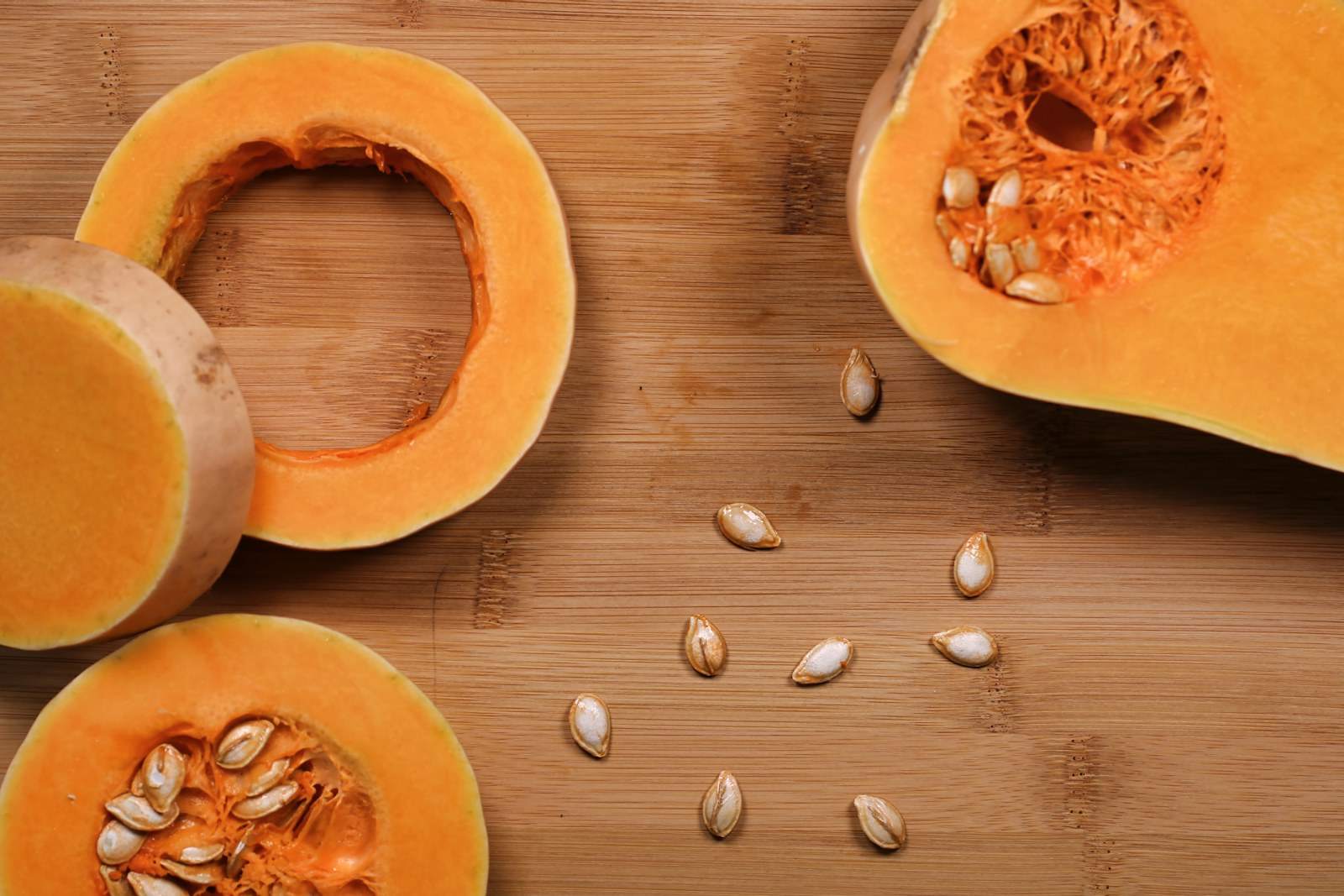
Roasting a sugar pumpkin. Halve it and scoop out the seeds. Roast the seeds for yourself if you like, but keep them from the baby. The AAP lists seeds among the choking hazards to avoid until age 4. Roast the halves cut side down at 375F for 45 to 50 minutes, until a fork slides in with no resistance. Scoop the flesh from the skin and puree or mash it.
The Canned Pumpkin Trap
Two cans sit side by side on the shelf and look almost the same. One says pumpkin. The other says pumpkin pie mix or pie filling, and it is a different food.
USDA lists the pie mix separately, and the numbers show why. It carries 208 milligrams of sodium per 100 grams against 5 for plain pumpkin, and 104 calories against 34. Sugar and spices are on its ingredient list too.
How to check in the aisle. Read the ingredient list. It should say pumpkin and nothing else. If you see sugar, corn syrup, or a spice blend, put it back.
The Dietary Guidelines for Americans, 2025-2030, say to avoid added sugars through early childhood. The CDC is just as direct: infants and young children should not have added sugars. A pinch of cinnamon at home is fine, as long as the sugar is not already in the can.
If a fall recipe calls for honey, leave it out until after the first birthday. The CDC says honey can carry the spores behind infant botulism, and that covers anything made with it.
Butternut and Acorn Squash
Butternut squash purees silky smooth with no added liquid. Acorn squash is even easier, because it roasts in its own skin.
Butternut. Peel, seed, and cube it. Steam for 20 to 25 minutes, or roast at 400F for 30 to 35 minutes, until it gives completely under a fork. Puree it, or fork mash for older babies.
Acorn. Halve it, scoop the seeds, and roast cut side down at 400F for 40 to 45 minutes. Scoop out the flesh.
No salt needed. The CDC advises against high-sodium foods for young children, and squash is already sweet.
Sweet Potato
Sweet potato is the most forgiving of the group and the easiest finger food. A roasted wedge holds its shape while the inside stays soft. Roast whole at 400F for 45 to 55 minutes, or peel, cube, and roast for 25 minutes.
Skip the marshmallow and brown sugar topping. The AAP lists marshmallows among the choking hazards to keep from children until age 4.
Apples, and the One Real Hazard Here
The AAP's choking guidance lists raw apple chunks alongside hot dogs, whole grapes, and raw carrot sticks. It recommends keeping these foods from children until age 4, and cutting food for young children into pieces no larger than half an inch. Raw apple is hard and slick, and it breaks into exactly the wrong shape when a baby with two teeth bites down.
That age-4 line is about firm chunks. Three ways to make apple work earlier:
- Cook it. Peel, core, dice, and steam or stew for 8 to 10 minutes, until it mashes with no effort.
- Grate it. Use the large holes of a box grater, so nothing firm is left to lodge.
- Wait on it. Raw slices and firm chunks stay off the plate until at least 4.
Which apples. Fuji, Gala, Golden Delicious, and McIntosh cook down softest and sweetest. Granny Smith stays tart and firm, so it is the last one to reach for. Our apple safety page has the cut for every age.
What to Serve at Each Stage
| Age | Pumpkin, squash, sweet potato | Apple |
|---|---|---|
| 6 to 8 months | Smooth puree, thinned until it drops off the spoon | Smooth cooked puree or unsweetened applesauce |
| 8 to 10 months | Soft roasted strips the length of your finger, or soft half-inch pieces | Soft cooked slices, peeled, that squish flat between your fingers |
| 10 to 12 months | Fork mashed, or soft cubes stirred into oatmeal, yogurt, or pasta | Grated raw apple, or cooked apple diced small |
| 12 to 24 months | Roasted wedges, squash soup, pumpkin in pancakes or pasta sauce | Grated raw apple, or apple cooked until soft. No raw slices or firm chunks until age 4 |
Serve food only when your baby is upright in a high chair with an adult within arm's reach. Never in a car seat or stroller, and never while crawling or playing. Our safe cutting techniques guide covers the shapes in more detail.
If your baby is still on thin purees at 10 months, move forward one step at a time. The roasted version of the same vegetable makes a good bridge.
Iron Is the Thing These Foods Do Not Do
Orange is not the same as iron-rich. Pumpkin has a little iron, about 1.7 milligrams in a half cup of plain canned puree. Squash and apple have very little, and plant iron is the harder-to-absorb kind.
The CDC advises pairing plant iron with vitamin C foods, and names iron-fortified infant cereal, tofu, beans, lentils, and dark leafy greens as plant sources. Red meat and poultry are the animal sources. So build the meal, not just the puree:
- Butternut squash puree stirred into iron-fortified infant cereal.
- Pumpkin oatmeal with soft strips of chicken or a spoon of pureed beans on the side.
Sweet potato is on the CDC's vitamin C list, so it already does the pairing job. Apple is not the vitamin C partner some recipes claim. Our guide to iron-rich first foods has the full picture.
Three Combinations Worth Making
Pumpkin oat porridge, 6 months and up. Stir 2 tablespoons of plain pumpkin and a pinch of cinnamon into 1/4 cup of cooked oats. Thin with breast milk or formula until it drops off the spoon.
Squash and red lentil mash, 6 months and up. Simmer 1/4 cup of red lentils with 1/2 cup of diced butternut squash for 15 to 18 minutes, until both fall apart. Mash together. No salt.
Sweet potato and black bean mash, 8 months and up. Roast one diced sweet potato at 400F for 25 minutes. Mash with 1/4 cup of rinsed low-sodium black beans and a pinch of cumin, loosened with a little water.
Batch Cooking and Freezing
Roast a halved butternut squash and two sweet potatoes together at 400F. Stew six to eight peeled apples into applesauce on the stove, and open one can of plain pumpkin. Hands-on time is about 15 minutes.
The AAP recommends freezing homemade baby food in an ice cube tray, about 1 ounce per cube. Move the cubes to a bag labeled with the food and date, and use them within 3 months. The FDA gives homemade baby food only 1 to 2 days in the refrigerator, so freeze the rest right away. Throw out whatever is left in the bowl your baby ate from.
Thaw a cube overnight in the refrigerator or warm it gently. Stir well and test the temperature, because heated purees hold hot spots. Our guide to batch cooking baby meals has the full system.
Not sure whether a specific fall food works at your baby's age? Check any food by age in TinyPlate and get the cut for their stage.
The Short Version
Roast it until it gives with no resistance. Buy the can that says pumpkin and nothing else. Cook or grate every apple. No honey until the first birthday. Put an iron food next to the orange one. Freeze in 1-ounce cubes and use them within 3 months.
Sources
- American Academy of Pediatrics. "Choking Prevention." HealthyChildren.org.
- American Academy of Pediatrics. "Starting Solid Foods." HealthyChildren.org.
- American Academy of Pediatrics. "Baby Food and Feeding." HealthyChildren.org.
- American Academy of Pediatrics. "Is it OK to make my own baby food?" HealthyChildren.org.
- Centers for Disease Control and Prevention. "Foods and Drinks to Avoid or Limit," Infant and Toddler Nutrition.
- Centers for Disease Control and Prevention. "Iron," Infant and Toddler Nutrition.
- Centers for Disease Control and Prevention. "Botulism Prevention."
- U.S. Department of Agriculture. FoodData Central: "Pumpkin, canned, without salt" and "Pumpkin pie mix, canned."
- U.S. Food and Drug Administration. "Once Baby Arrives," Food Safety for Moms-to-Be.
- U.S. Department of Agriculture and U.S. Department of Health and Human Services. "Dietary Guidelines for Americans, 2025-2030."