
Safe Cutting Techniques: Turn Choking Hazards Into Safe Foods
Key Takeaways
- The right cut lowers the risk on most foods on the AAP's choking hazard list. It lowers the risk; it does not make them safe.
- The "round, firm, sticky" rule is the simplest filter: a food that is round, firm, and the size of a child's airway is a serious risk until age 4.
- Lengthwise cuts (creating thin strips or quarters) almost always reduce risk more than cross-cuts (creating rounds).
- The squish test: any soft food should be soft enough to squish between your thumb and forefinger.
- These cutting guidelines apply through age 4 per the AAP, not just for babies.
The Cut Is the Difference
The American Academy of Pediatrics (AAP) maintains a list of foods that are high-risk choking hazards for children under 4: whole grapes, whole cherry tomatoes, whole blueberries, hot dogs, whole nuts, popcorn, hard candy, raw carrots, large chunks of meat or cheese, marshmallows, gum, and a few others. The list reads like a warning, but in most cases the food itself is not the problem. The size and shape are.
A whole grape and a quartered grape are the same fruit. One can block a child's airway. The other cannot. Most of the foods on the choking hazard list become safe with a specific cut, and the cuts are not complicated once you know them. Safe food cuts for babies and toddlers are the single highest-leverage skill in early-eating safety.
This post is the food-by-food cut guide pediatricians actually use, with the principle behind each cut.
The Two Principles
Principle 1: Cut to avoid a round shape the size of a child's airway. A child's trachea is roughly the size of a drinking straw, about 1 cm in diameter. Anything round and firm at that size can block it.
Principle 2: Cut to soften texture. Some foods (raw apple, raw carrot) are firm enough that they need to be cooked, grated, or sliced very thin to be safe for young children.
The "round, firm, sticky" rule, popularized by pediatric feeding experts, captures both principles. Any food that is round, firm, and a hazardous size is a risk. Modify any one of those three (cut it, cook it, or shape it differently) and the risk drops.
The Cut Guide, Food by Food
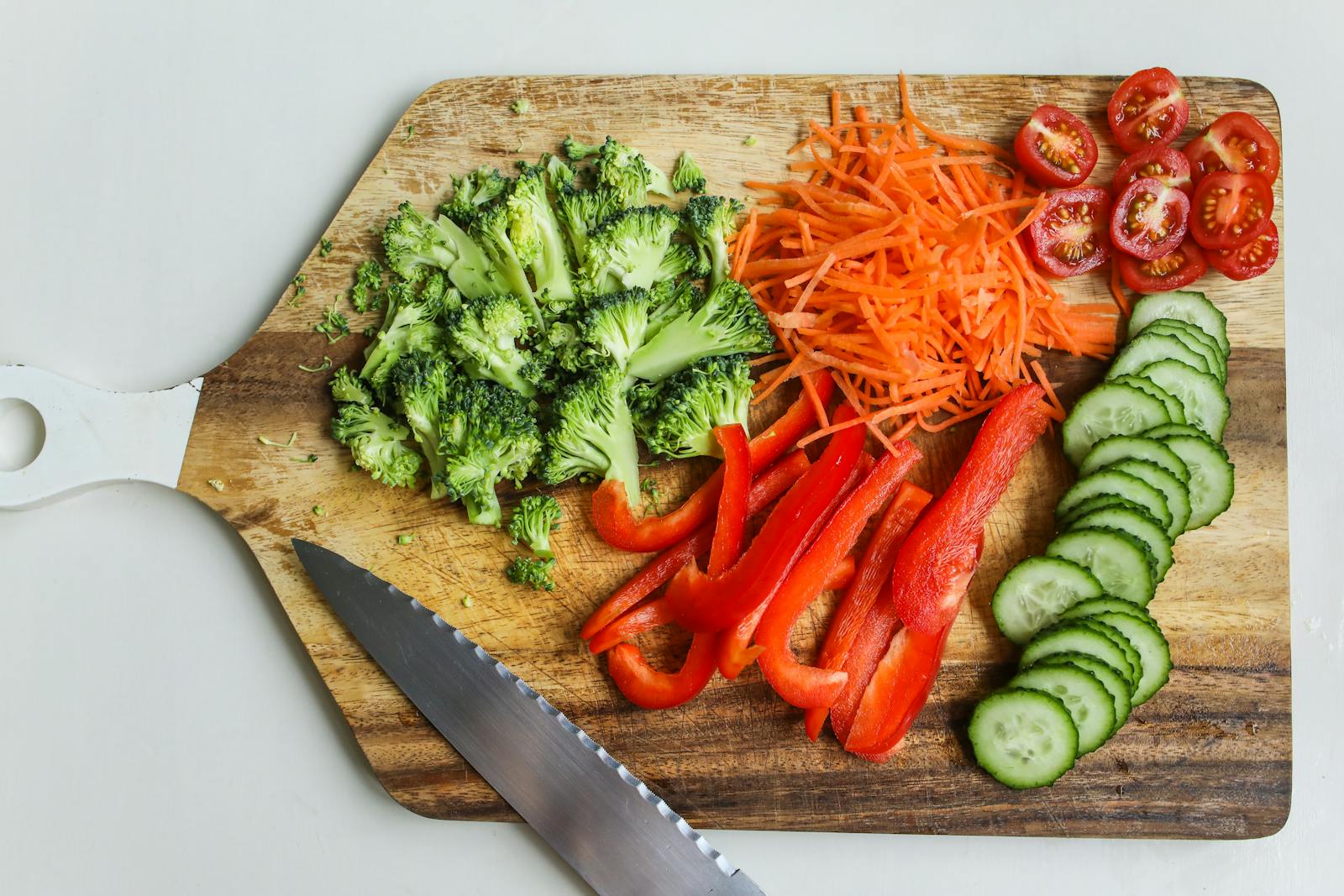
Grapes, Cherry Tomatoes, Blueberries
Hazard: Round, firm, the wrong size. The single most-cited cause of food-related choking incidents in young children.
Safe cut: Quartered lengthwise (in halves through the long axis, then halve again). Creates thin slivers, not rounds.
Through what age: Quartered through age 4 per the AAP. After age 4, the airway is larger and the chewing reflex is more developed.
For blueberries specifically: quarter for babies under 12 months, halved for 12 months to 4 years. Smaller blueberries can be smashed.
Hot Dogs and Sausages
Hazard: The AAP names hot dogs as the single most common cause of food-related choking deaths in children under 3. The cylindrical shape, compressible texture, and ability to conform to a child's airway are uniquely dangerous.
Safe cut: Quartered lengthwise. Slice the hot dog in half end-to-end, then slice each half lengthwise again. Then cut into small pieces. Never offer hot dog rounds.
Many pediatricians recommend skipping hot dogs entirely for children under 4 because even with proper cutting, the risk is higher than most other foods. If your child does eat hot dogs at a cookout, cut every single one this way.
Whole Nuts
Hazard: Round, hard, the wrong size. Whole nuts are a choking hazard until age 4 per the AAP.
Safe form: Smooth nut butter thinned to a yogurt consistency, or finely ground nut meal mixed into other foods. Peanut puff snacks dissolve in the mouth. Whole or chopped nuts wait until age 4.
Raw Carrots and Apples
Hazard: Firm enough to bite off a hazardous-size chunk, hard enough to lodge.
Safe form:
- 6 to 12 months: Cooked until soft (carrots) or grated very thin (apples). Cooked carrots should pass the squish test. Apples can be cooked into applesauce or grated raw onto yogurt.
- 12 months to 4 years: Same plus thin matchsticks of raw carrot or apple, cut about as thin as a credit card.
- Over 4: Whole pieces can be reintroduced.
Cheese
Hazard: Firm cheese cubes are slippery and can be the wrong size.
Safe form: Thin strips or shreds, not cubes, for babies and toddlers. Soft cheese (ricotta, soft mozzarella, cottage cheese) is easier and a good early option.
Meat
Hazard: Large chunks of meat are hard to chew thoroughly for young children. Tough cuts (steak, brisket without slow-cooking) can be especially difficult.
Safe form:
- 6 to 8 months: Pureed or finely shredded soft meat (slow-cooked chicken, lamb, or beef).
- 9 to 11 months: Finely shredded or chopped soft meat. Small soft meatballs.
- 12 months and up: Small bite-sized pieces of soft cooked meat. Avoid tough cuts and gristle.
Popcorn
Hazard: Hard, sharp edges, the wrong size, and pieces of un-popped kernel. Among the highest-risk snacks.
Safe form: None for children under 4. The AAP recommends no popcorn until age 4.
Marshmallows, Gum, Hard Candy
Hazard: Soft sticky foods like marshmallows can conform to and block the airway. Gum and hard candy are firm choking hazards.
Safe form: None for young children. The AAP recommends no whole marshmallows, gum, or hard candy until at least 4 years old.
Bread (a frequent surprise)
Hazard: Dense bread, especially with chewy crusts or large bites, can clump in the mouth and cause choking.
Safe form: Soft bread (no crust for young babies) torn into small pieces and toasted to a light crisp, which prevents clumping. Avoid dense artisan bread for babies. Bagel pieces should be small and the bagel softened.
Other Common Foods
- Pasta: Cut into bite-sized pieces. Long noodles (spaghetti) should be cut into 1-inch pieces for younger toddlers.
- Olives and pickles: Cut lengthwise. Pickles should be small, soft, and quartered.
- Whole strawberries: Hulled and quartered or sliced thin for younger babies.
- Stone fruit (peaches, plums): Pit removed, peeled for young babies, soft pieces only.
- Watermelon: Rind and seeds removed, cut into long strips or small soft cubes.
- Avocado: Sliced strips or small soft cubes. Naturally one of the easiest first foods.
For more on summer fruits specifically, see our summer fruits guide.
The Squish Test
Any soft food should pass the squish test: hold a piece between your thumb and forefinger and squeeze. If it squishes easily with light pressure, it is soft enough for a baby. If it does not, it is too firm.
This applies to cooked vegetables (sweet potato, carrot, broccoli, peas), soft meats, soft cheese, and ripe fruit. A cooked carrot stick that is firm enough to slice cleanly is still too firm for a 7-month-old.
What to Do in a Choking Emergency
Take an infant or child CPR class before your baby starts solids. The Red Cross and most local hospitals offer them.
Brief reference, not a substitute for training:
For babies under 1: Position face-down along your forearm, head lower than chest. Five firm back blows between the shoulder blades. If no clearance, turn over and do five chest thrusts. Repeat. Call 911.
For children 1 and up: Shout for someone to call 911 right now, then stand or kneel behind the child, fist just above the belly button, thumb side in, and give sharp inward and upward thrusts (Heimlich). Five thrusts at a time. Keep the fist well below the tip of the breastbone.
The CDC and American Heart Association both publish current step-by-step guidance.
What TinyPlate Does Differently
The Safety Search inside TinyPlate is built around exactly this problem. Type in any food (grape, hot dog, blueberry, almond, popcorn) and you get the cut and stage guidance for your child's exact age, with no scrolling through long lists or dense pediatric documents. Every recipe in the Weekly Meal Plan is age-checked, so the cuts in the plan are already correct for the stage you set.
Download TinyPlate free on the App Store.
Sources
- American Academy of Pediatrics. "Choking Prevention." HealthyChildren.org, 2023.
- American Academy of Pediatrics. "Policy Statement: Prevention of Choking Among Children." Pediatrics, 2010.
- Centers for Disease Control and Prevention. "Foods and Drinks for 6 to 24 Month Olds." CDC Infant and Toddler Nutrition.
- American Heart Association. "Choking First Aid for Infants and Children." Heart.org.
- U.S. Department of Agriculture. "Dietary Guidelines for Americans, Birth to 24 Months." USDA, 2020 to 2025.