
Iron-Rich First Foods Every Baby Needs at 6 Months
Key Takeaways
- Iron is the single nutrient babies need most from complementary foods, according to the AAP.
- Iron stores built up during the third trimester begin to deplete around 6 months, which is one reason solids are recommended at this age.
- Heme iron (from meat, poultry, and fish) is far more bioavailable than non-heme iron (from plants and fortified grains).
- Pairing non-heme iron with a small amount of vitamin C improves absorption.
- A baby who skips iron-rich first foods in favor of fruits and vegetables can develop iron deficiency by 9 to 12 months.
Why Iron-Rich Baby Food Matters
If there is one nutrient priority for a baby starting solids, it is iron. The American Academy of Pediatrics (AAP) is direct about this: complementary foods introduced around 6 months should be iron-rich, because the iron stores a baby builds in the third trimester of pregnancy begin to run low at this age, and breast milk and formula alone are not designed to replace them.
Iron supports brain development, red blood cell production, and energy. Iron deficiency in the first two years of life has been linked, in multiple studies, to long-term effects on cognitive and motor development, some of which are not fully reversible even with later supplementation.
That is the case for taking iron-rich baby food seriously from day one of solids. The good news: it is straightforward when you know what to look for.
How Iron Absorption Works
Not all iron in food is the same. Two forms matter:
Heme iron is the form found in animal foods. The body absorbs it efficiently, with absorption rates of around 15 to 35 percent depending on the meal context.
Non-heme iron is the form found in plants, eggs, and iron-fortified grains. Absorption is lower, often in the 2 to 20 percent range, and is more sensitive to what else is eaten alongside it.
Two practical implications:
- Animal-source iron (meat, poultry, fish) is the most efficient way to get iron into a baby's body.
- Plant and fortified-grain iron still counts, but the food pairing matters. Adding a small amount of vitamin C to a non-heme iron meal (a few strips of bell pepper, a quarter strawberry, a small spoon of tomato puree) significantly improves absorption.
A note on inhibitors: tea, coffee, and large amounts of calcium reduce non-heme iron absorption. None of these are appropriate for a baby anyway, but it is worth knowing that offering a yogurt-heavy meal alongside iron-rich plant foods may slightly blunt absorption. Spacing them through the day handles this without effort.
Iron-Rich First Foods, Ranked
These are the foods the AAP and pediatric nutritionists most commonly recommend for the first month of solids, ordered roughly by iron density and bioavailability.
Pureed Meat (Beef, Lamb, Chicken, Turkey)
The single best iron source for babies. Slow-cooked beef or lamb is highest in heme iron, with about 2 to 3 mg of well-absorbed iron per 3-ounce serving. Pureed chicken or turkey is slightly lower but still strong.
Some parents are surprised that meat is recommended as a first food, since the conventional cultural script starts with bland fruits. The evidence does not support starting with fruit. Pureed meat at 6 months is on the AAP's recommended list of first foods.
How to serve: Cook the meat low and slow until fork-tender. Puree with a small amount of breast milk, formula, or water to a smooth consistency. For older babies (8 months and up), finely shredded soft meat works well.
Iron-Fortified Infant Cereal
Single-grain oat or rice cereal mixed with breast milk or formula is the most common first food in the United States. Most commercial infant cereals are fortified to deliver about 7 mg of iron per dry tablespoon, which is substantial.
The iron in fortified cereal is non-heme, so absorption is improved by pairing with vitamin C. Adding a teaspoon of pureed pear, applesauce, or mashed berry to the cereal does this for free.
How to serve: Mix dry cereal with breast milk, formula, or water to a thin consistency for first feedings. Thicken gradually as your baby gets comfortable.
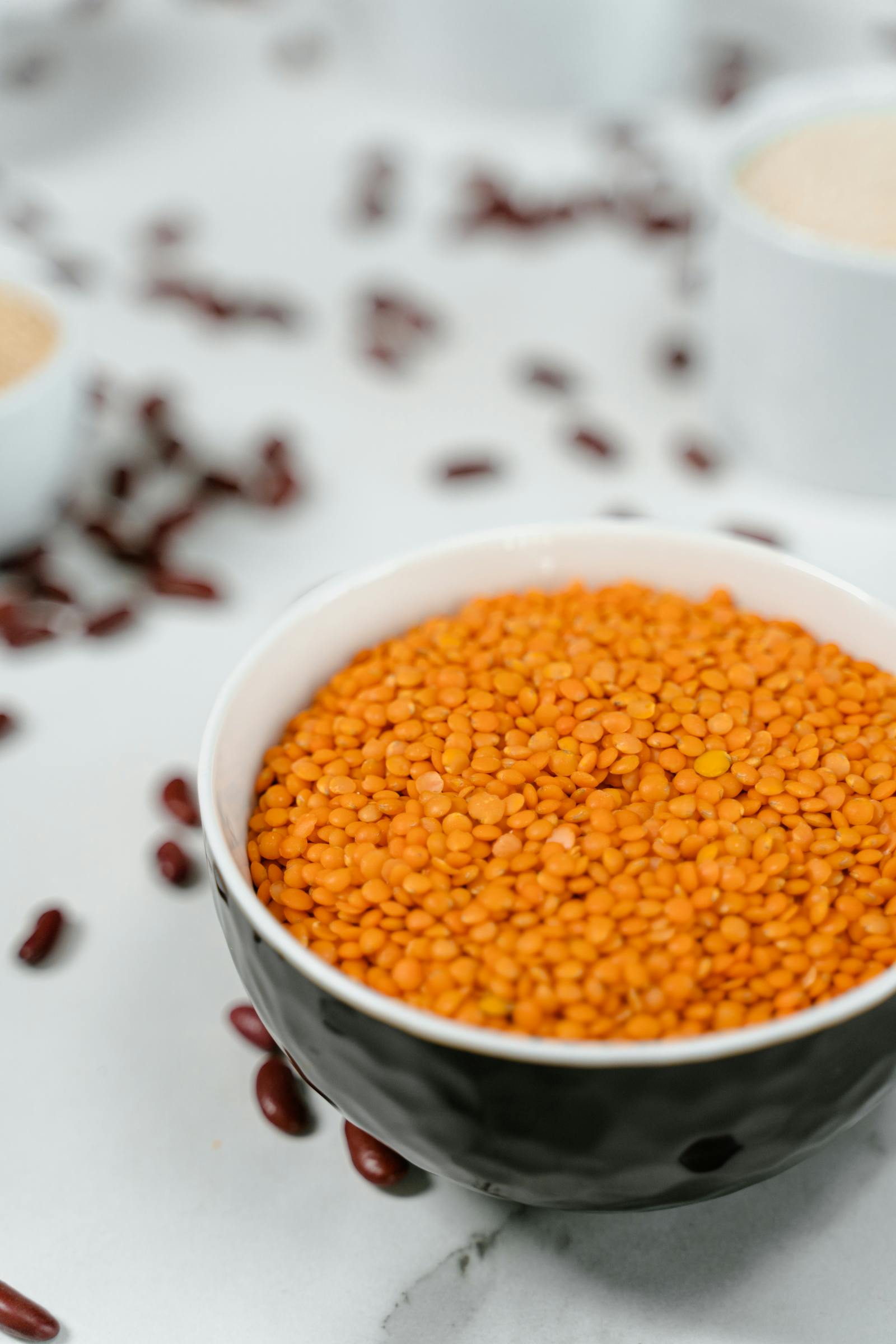
Pureed Lentils, Beans, and Chickpeas
Excellent plant-based iron source, and one of the cheapest. Cooked lentils deliver about 3 mg of iron per half cup, though absorption is lower than meat.
How to serve: Cook red or green lentils until very soft, then puree with water or broth. A pinch of cumin works well and adds aroma. Pair with a small piece of vitamin-C-rich food (a soft strip of red bell pepper, a smear of mashed berry) to boost absorption.
Egg Yolk
Egg yolk contains about 1 mg of iron per yolk. Lower than meat but accessible and easy to prepare. Egg is also one of the top 9 allergens, so early introduction serves a dual purpose.
How to serve: Hard-boil or scramble well, then mash into a smooth consistency for younger babies. The whole egg (yolk and white) is recommended together by the AAP for allergen introduction.
Tofu and Soy Foods
Firm tofu delivers about 3 mg of iron per half cup, and soy is one of the easiest plant-based proteins for young babies to manage texturally.
How to serve: Cube soft or silken tofu into small, easily mashable pieces. Edamame (shelled and mashed) works for older babies.
Dark Leafy Greens
Spinach, kale, and chard contain iron, but absorption is limited by oxalates and other compounds in the greens themselves. They are a fine supporting food, not a primary iron source. Cook greens thoroughly and pair with vitamin C for best results.
A Practical First-Month Iron Plan
Here is a sample week-by-week structure that builds iron-rich variety while staying simple.
Week 1: Iron-fortified infant cereal once a day, paired with a small amount of mashed pear or applesauce for the vitamin C boost.
Week 2: Add pureed meat (start with chicken or turkey, which has a milder flavor) two to three times per week. Continue cereal on other days.
Week 3: Add pureed lentils or beans. Rotate through cereal, meat, and lentils across the week. Introduce a vegetable side (sweet potato, pea puree, squash).
Week 4: Introduce egg (well-cooked, both yolk and white). Most pediatricians recommend doing this as part of the allergen introduction window. Continue rotating the established iron sources.
By the end of month one, your baby has been exposed to four to five distinct iron sources, plus a handful of vegetables and fruits. The Weekly Meal Plan feature inside TinyPlate handles this rotation automatically and shows you which iron sources are on the plan each week.
Signs of Iron Deficiency to Watch For
Iron deficiency develops gradually, and the signs can be subtle. The AAP recommends a routine iron-status check at the 9 or 12-month well-visit (a small fingerstick blood test). Between visits, watch for:
- Persistent pale skin (especially the lips, palms, and inside of the lower eyelids).
- Unusually low energy, fatigue, or decreased interest in play.
- Poor appetite.
- Slow weight gain.
- Increased irritability.
None of these signs alone confirm iron deficiency. The blood test does. If you are concerned, ask your pediatrician.
A Note on Vegetarian and Vegan Families
Babies raised on plant-based diets can absolutely meet their iron needs, but it takes intention. Rely on iron-fortified infant cereal, lentils, beans, and tofu as daily staples. Pair every iron-rich meal with vitamin C. Some pediatricians may recommend a liquid iron supplement to bridge any gaps. Talk through the plan at your 6-month well-visit.
What TinyPlate Does Differently
The AI Meal Plan inside TinyPlate is designed around the foundational nutrient priorities of the starting-solids stage, with iron at the top of the list. Every weekly plan it generates includes iron-rich foods on a regular cadence, paired with vitamin-C sources for absorption, while respecting any allergies you have flagged.
You do not need to track this on a spreadsheet. The plan does the math.
Download TinyPlate free on the App Store.
Sources
- American Academy of Pediatrics. "Iron Needs of Babies and Children." HealthyChildren.org.
- Baker, R.D., and Greer, F.R. "Diagnosis and Prevention of Iron Deficiency and Iron-Deficiency Anemia in Infants and Young Children." Pediatrics, 2010.
- U.S. Department of Agriculture. "Dietary Guidelines for Americans, Birth to 24 Months." USDA, 2020 to 2025.
- Centers for Disease Control and Prevention. "Iron." CDC Infant and Toddler Nutrition.
- Lozoff, B., et al. "Long-Lasting Neural and Behavioral Effects of Iron Deficiency in Infancy." Nutrition Reviews, 2006.